


Nutrition for L'Étape Argentina 2026: Strategy and Supplementation | Across
Discover how many carbohydrates, fluids, and sodium you need for L'Étape Argentina 2026 (64 km and 134 km). Science-backed nutrition strategy supported by Across, official sports performance partner.

Nutrition at L'Étape Argentina by Tour de France 2026
The strategy that can change your performance in Córdoba
On March 22, L'Étape Argentina arrives in Córdoba with two demanding routes:
• Long Route: 134 km
• Short Route: 64 km
An experience inspired by the spirit of the Tour de France, where strategy makes the difference.
In events of this level, performance does not depend only on training.
It depends on how you manage your energy, hydration, and internal balance kilometer by kilometer.
And that’s where nutrition stops being a detail and becomes a tactical tool.
What should you eat at L'Étape Argentina?
The nutrition strategy for 64 km and 134 km
During a cycling endurance event:
• Glycogen stores progressively decrease
• Dehydration begins before you feel thirsty
• Sodium becomes diluted through sweat
• Neuromuscular fatigue accumulates
A poor nutrition strategy can limit your performance even if your physical preparation is excellent.
Many cyclists:
• Improvise on race day
• Try new products
• Underestimate sodium
• Wait until they feel hungry to consume carbohydrates
The good news: nutrition is not complex, it’s strategic.
There is no single nutrition formula (but there are clear principles)
Every cyclist is different:
• Different body weight
• Variable sweat rate
• Different gastrointestinal tolerance
• Specific competitive level
But there are scientifically supported recommendations that work for most athletes.
The roadmap is simple:
1. Master the basics
2. Test in training
3. Adjust according to your response
4. Execute with confidence
Pillar 1: Carbohydrates
How many grams of carbohydrates per hour should I consume at L'Étape?
Carbohydrates are the primary fuel during prolonged efforts. If you don’t replenish them, muscle glycogen drops and performance declines sharply.
Our general hourly recommendations:
Short Route (64 km)
• Low–moderate intensity: 30–60 g/hour
Long Route (134 km)
• Moderate intensity: 60–75 g/hour
• High intensity: 75–90 g/hour
Trained athletes can tolerate up to 90–120 g/hour, but this requires specific gut training.
Physiological key point
When exceeding 60 g/hour, it’s ideal to combine glucose + fructose (2:1 or 1:0.8 ratio).
This improves intestinal absorption and reduces gastrointestinal discomfort.
Strategic advice
Do not wait until you feel hungry. Begin consuming carbohydrates within the first 20–30 minutes. In cycling, the stable riding position favors digestion — take advantage of it.
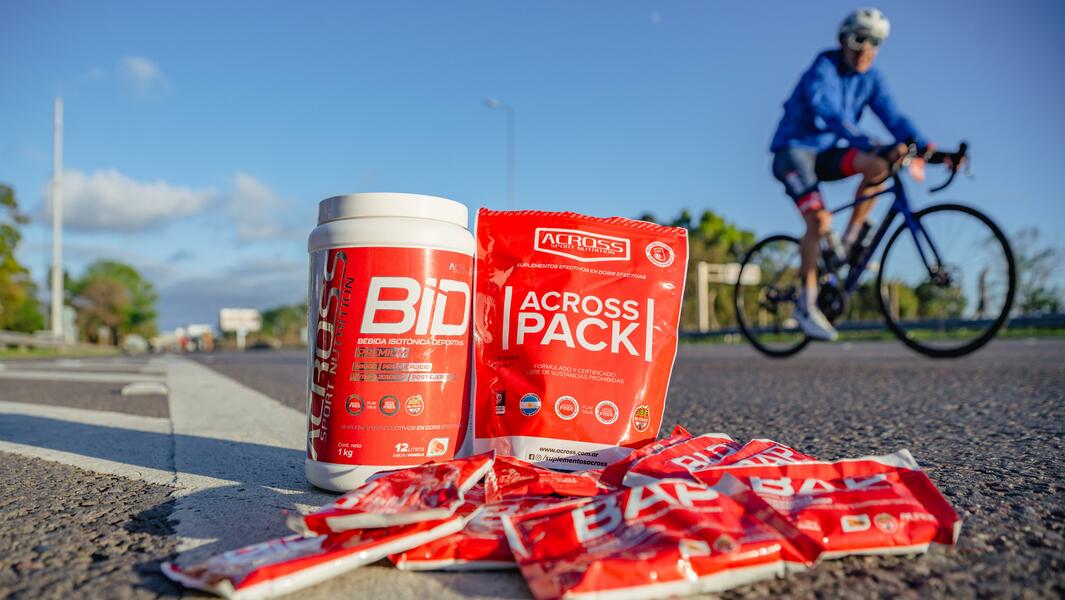
Across offers options specifically designed for prolonged efforts, such as the Across Sports Gel, which is:
• A concentrated source of fast-absorbing carbohydrates
• Ideal for sustaining intensity during key moments
• Easy to consume while riding
Typical strategy:
1 gel every 30–40 minutes depending on pace and tolerance.
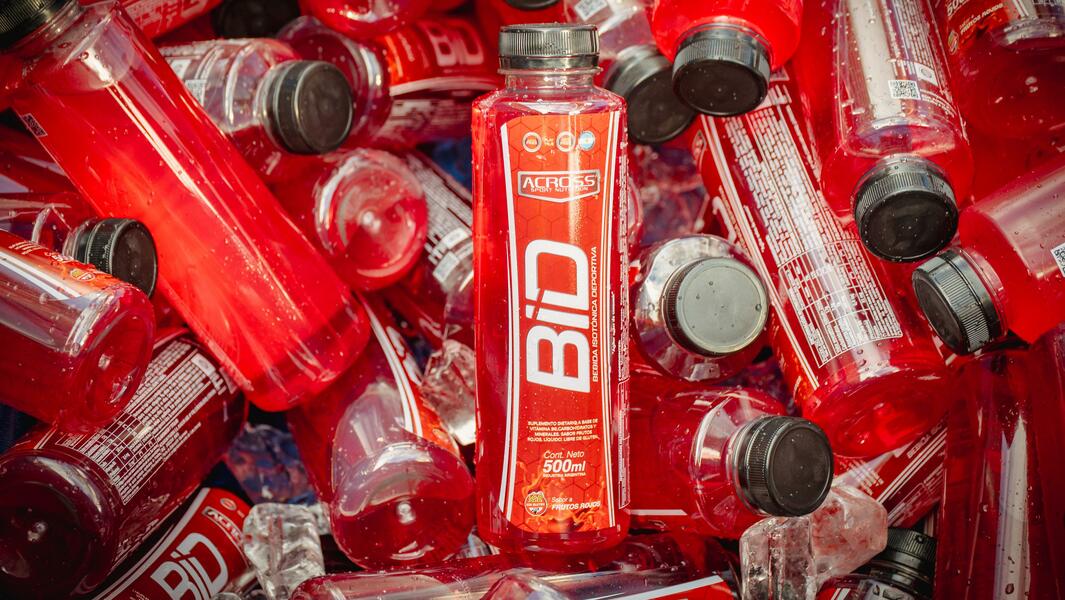
You can also complement with Across isotonic drink, which provides:
• Carbohydrates + electrolytes
• Additional grams per hour without overloading the stomach
• Ideal for maintaining consistent intake
Combining gel + drink makes it easier to reach 60–90 g/hour without discomfort.
Pillar 2: Electrolytes
How much sodium do you need for L'Étape?
One of the most common mistakes is hydrating with water alone.
Sodium:
• Maintains fluid balance
• Promotes intestinal absorption
• Supports plasma volume
• Reduces the risk of hyponatremia
General recommendation
• 500–700 mg of sodium per liter
• Heavy sweaters: 1000–1200 mg/L
Signs of high sweat rate
• White marks on clothing
• Eye irritation
• Heavy sweating from the start
Cramps do not have a single cause, but maintaining electrolyte balance helps preserve muscle function and reduce risk.
We recommend Across Rehydration Salts, one serving every 30–45 minutes.
• High sodium concentration
• Ideal for heavy sweaters
• Useful on hot days in Córdoba
They can be combined with isotonic drinks or adjusted according to sweat rate.
Pillar 3: Hydration
How much fluid should you drink at L'Étape?
It’s not about drinking as much as possible.
It’s about drinking what you need.
General guidelines:
• 60–90 min: 400–600 ml/hour
• 90 min to 3 hours: 500–750 ml/hour
• More than 3 hours: 500–750 ml/hour with adequate sodium
If temperatures exceed 25°C in Córdoba, you will likely need to increase intake.
Nutrition strategy for L'Étape according to your level
Amateur
• 1–2 gels per hour
• Water with electrolytes
• Simple, sustained strategy
Intermediate
• 2 gels + sports drink per hour
• Sodium adjusted to sweat rate
Advanced / Competitive
• 75–90 g carbohydrates per hour
• Glucose/fructose combination
• Fine-tuned fluid and sodium intake
• Everything previously tested in training
Nutrition 24–48 hours before L'Étape
Especially for the Long Route (134 km):
• Increase carbohydrate intake (6–8 g/kg/day)
• Progressive hydration
• Avoid new foods
• Carbohydrate-rich dinner — and most importantly, familiar to you
• Breakfast 2–3 hours before: 1–2 g/kg carbohydrates
Proper carbohydrate loading reduces the risk of early glycogen depletion and improves energy availability during the race.
Remember to follow our in-race nutrition recommendations — this refers to what you consume each hour based on your distance, estimated pace, and sweat profile.
That’s where strategy stops being general and becomes personalized.
Across: Official Sports Performance Partner of L'Étape Argentina 2026
Across is the main sponsor and official sports performance partner of L'Étape Argentina 2026.
Their approach is not just about providing supplements, but helping cyclists build a realistic and personalized nutrition strategy.
At the official stand, you will be able to:
• Analyze your nutrition plan
• Adjust carbohydrates, sodium, and fluids
• Get questions answered by professionals — including an on-site nutritionist
• Learn about the strategic tool MATRIZ 360, which helps calculate your race nutrition based on your personal data
What is the Across Nutrition Calculator (Matriz 360)?
The Across Nutrition Calculator is a scientifically developed tool that allows you to visualize practical combinations based on:
• Distance
• Estimated pace
• Sweat rate
• Personal preferences
It’s not a magic solution. It’s a tool for making informed decisions based on your real data.
Because the difference between completing 134 km and truly competing at performance level is not only in your legs — your nutrition plays a key role in everything you can do on the bike.
Frequently Asked Questions about Nutrition at L'Étape Argentina
When should I start consuming carbohydrates?
Within the first 20–30 minutes of the race.
Is drinking water enough?
No. You must include sodium to maintain fluid balance.
Can I try a new gel on race day?
Not recommended. Everything should be tested in training.
How many grams of carbohydrates per hour do I need for 134 km?
Between 60 and 90 g/hour depending on your level and intensity.
For the Across team, nutrition is not just a supplement — it must be part of each athlete’s race performance strategy. A solid nutrition strategy becomes a competitive advantage, and it’s an area where you can truly make a difference. Nutrition is trainable.
In an event like L'Étape Argentina 2026, the right strategy can mean the difference between simply surviving the race and sustaining intensity until the finish.
See you in Córdoba! Visit us at the stand to calculate your race nutrition.
Martín Olivares
Bachelor’s Degree in Nutrition – MP 3234
Technical Partner of Across
L'Étape Argentina 2026